
How Virtual Companions are transforming daily life for elderly and vulnerable residents
The Silent Crisis: Loneliness in UK Care
Across the UK, over 2.6 million older adults experience chronic loneliness—a condition as harmful to health as smoking 15 cigarettes a day. In care homes and supported living facilities, residents often spend hours without meaningful human interaction, leading to depression, cognitive decline, and deteriorating physical health.
Traditional care models, while compassionate, are stretched thin. Staff shortages mean carers have limited time for conversation, and family visits can’t fill every quiet hour. The result? A generation of vulnerable individuals facing isolation at their most fragile moments.
Enter AI: Your New Digital Companion
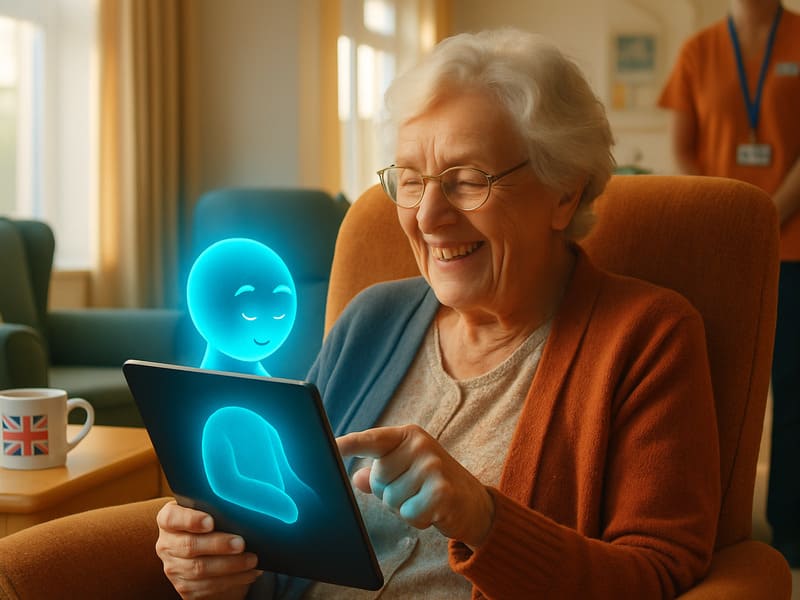
Artificial intelligence is revolutionising companionship in UK care settings. Today’s AI virtual assistants aren’t just voice-activated gadgets—they’re sophisticated companions designed to understand, engage, and support residents throughout their day. Here’s how they’re making a difference:
Intelligent Conversation:
- Natural Dialogue: Advanced language models engage in meaningful conversations about residents’ interests, memories, and daily experiences
- Memory Retention: AI companions remember previous conversations, creating continuity and deeper relationships over time
- Emotional Recognition: Voice analysis detects mood changes, allowing assistants to respond with appropriate empathy and support
- Cultural Awareness: Systems trained on British culture, history, and regional dialects create more relatable interactions
Smart Reminders & Daily Support:
- Medication Management: Gentle, personalised reminders for medications, with escalation to staff if doses are missed
- Activity Prompts: Encouraging participation in exercises, hobbies, or social activities based on individual preferences
- Appointment Alerts: Timely reminders for medical appointments, family visits, or care home activities
- Routine Reinforcement: Supporting daily routines like meal times, personal care, and sleep schedules
Entertainment & Engagement:
- Personalised Content: Curated music from residents’ youth, audiobooks, radio programmes, and news updates
- Interactive Games: Memory games, quizzes, and word puzzles designed to maintain cognitive function
- Storytelling: AI companions can share stories, jokes, or even help residents record their own life stories
- Virtual Connections: Facilitating video calls with family members and coordinating with care staff
Real Results: Transforming Lives Across the UK
Real-World UK Example: Shropshire Council’s GenieConnect® Virtual Care
Shropshire Council piloted GenieConnect®, a virtual care platform, to support older adults living independently. The system provides daily reminders, video calls, and real-time data monitoring, aiming to reduce isolation and support medication adherence.
Annabelle’s Story (from the official Shropshire Council case study):
“Annabelle, an older adult living alone, was provided with GenieConnect®. Each day, she received reminders for her medication and scheduled video calls from the virtual care team. This not only helped her remember important tasks but also gave her regular social interaction, reducing her feelings of isolation. Annabelle reported feeling more secure and connected, knowing someone was always available to check in on her.”
The council found that such virtual care solutions helped free up staff capacity, provided flexible care, and offered an alternative for those who preferred to remain at home rather than move into residential care.
Source: Shropshire Council Case Study (PDF)
Academic Research: Companionship with Alexa in Dementia Care
A 2024 case study by researchers at Loughborough University examined how a person living with dementia in the UK used a smart speaker (Amazon Alexa) for companionship. The study used naturalistic video data to analyze daily interactions.
Key Findings:
- The participant used Alexa for reminders (medication, appointments) and for conversation, music, and games.
- The device became a “companion,” with the participant often talking to Alexa as if it were a person, expressing both gratitude and frustration.
- The study concluded that virtual assistants can play a meaningful role in “doing companionship,” especially for those with cognitive impairments, by providing a sense of presence and routine.
Quote from the Study:
“Our results show how actions such as complaints about and blamings directed towards the device are achieved through shifts of ‘footing’ between turns that are ostensibly ‘talk to oneself’ and turns designed to occasion a response. Our findings have implications for the design, feasibility, and ethics of virtual assistants as companions.”
Source: Doing Virtual Companionship with Alexa – Social Interaction Journal, 2024
International Reference: ElliQ AI Companion
While not UK-specific, the ElliQ AI companion has been widely adopted in care settings internationally and is referenced in UK care technology discussions. Studies show that ElliQ users experienced an 80% reduction in loneliness and high engagement rates, with the device providing proactive reminders and initiating conversations.
Source: AI for Seniors: A New Era of Care and Companionship
Privacy and Dignity: A British Standard
UK-deployed AI companions prioritise privacy and dignity above all else. Voice data is processed locally within care facilities, personal conversations are never recorded or shared, and all systems comply with strict GDPR and NHS data protection standards. Residents maintain full control over their interactions, with easy opt-out options and family oversight capabilities.
The Human Touch Remains Essential
AI companions don’t replace human carers—they enhance their work. By handling routine reminders and providing constant companionship, virtual assistants free up care staff to focus on complex medical needs, personal care, and meaningful human connections. The result is a care environment where technology and humanity work hand in hand.
Looking Ahead: The Future of Digital Companionship
The next generation of AI companions will offer even more sophisticated support: emotion-responsive conversations, integration with health monitoring systems, and personalised cognitive therapy programmes. As these technologies evolve, UK care providers will be able to offer unprecedented levels of personalised, round-the-clock emotional support.
Why This Matters for UK Care
With an ageing population and increasing care demands, AI companions represent a practical solution to one of our most pressing social challenges. For care providers, they offer improved resident wellbeing, reduced staff burden, and better care outcomes. For families, they provide peace of mind knowing their loved ones have constant, patient companionship.
Most importantly, for residents themselves, AI companions offer dignity, engagement, and the simple human need for conversation—available whenever they need it most.
Want to learn more about how AI is transforming UK care? Stay tuned for our next issue, where we’ll explore predictive analytics that help prevent hospital readmissions..
