
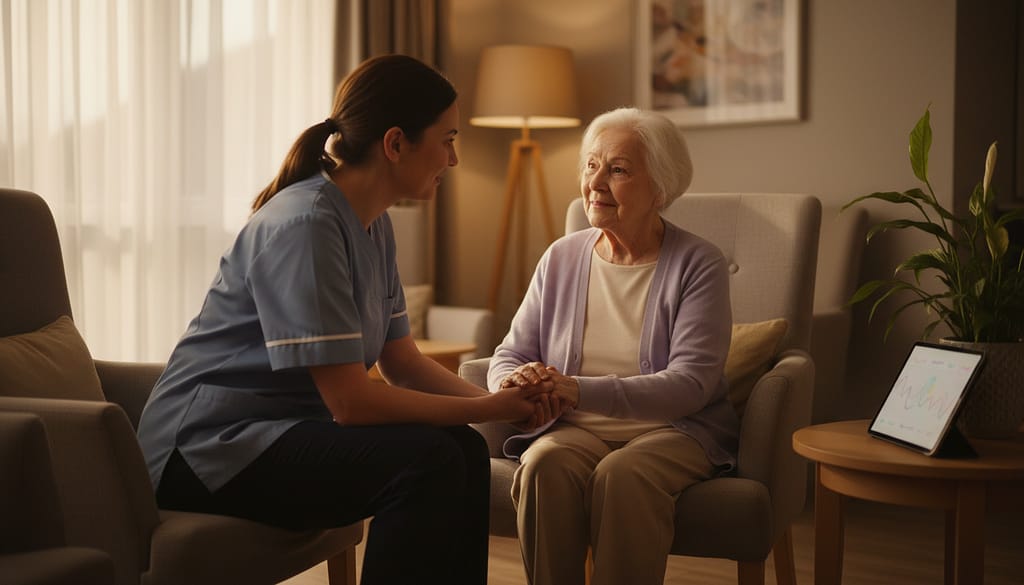
Dementia care is one of the most emotionally demanding and clinically complex responsibilities in UK care homes. Residents often struggle to express pain, discomfort or early distress, making it difficult for carers to detect changes before they escalate.
Now, AI-powered tools are beginning to support dementia care in ways that were never possible before—without relying on intrusive cameras or constant surveillance.
Why Dementia Care Needs a Different AI Approach
Most digital monitoring systems in care homes focus on falls, safety alerts or basic activity tracking. While useful, these systems do little to help carers understand the subtle, early behavioural cues that often signal distress in dementia.
Modern AI tools change this entirely.
By analysing non-intrusive signals such as movement, sound patterns and activity levels, AI can detect:
Why Dementia Care Needs a Different AI Approachmood changes
- micro-patterns in behaviour
- environmental triggers
- early warning signs of agitation
- wandering risk
- sleep disruptions
These insights give carers something they’ve never had before: the ability to intervene proactively rather than reactively.
Understanding Behaviour Before It Escalates
AI excels at analysing small changes over time—changes that are often invisible during routine care.
In dementia support, this helps anticipate:
 Sundowning
AI can identify early restlessness, pacing or environmental triggers that predict sundowning episodes hours before they occur.
 Agitation Triggers
It can link mood changes to:
- temperature variations
- noise levels
- lighting
- overstimulation
- undetected pain
This helps carers adjust a resident’s environment before stress escalates.
 Wandering Risk
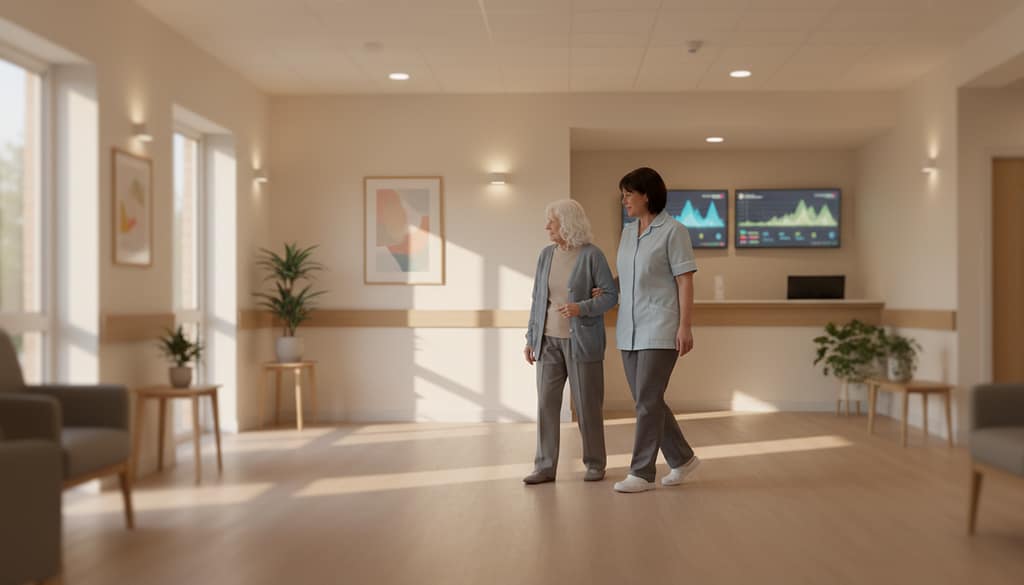
AI detects deviations from a resident’s normal walking pattern or room-to-room movement, giving staff an early alert before a wandering episode begins.
 Sleep Disruption
Irregular sleep can predict daytime confusion, anxiety or falls. AI creates a sleep history that highlights these trends over weeks or months.
AI That Builds Personalised Daily Routines
One of the most promising advances in dementia support is AI-generated routine optimisation.
By examining patterns over time, AI can suggest:
- ideal times for showers
- best hours for activities
- when a resident is most receptive
- periods where overstimulation should be avoided
- meal times that reduce fussiness or refusal
- environmental changes that calm anxiety
These routines promote predictability—a crucial comfort for people living with dementia.
Interpreting Non-Verbal Cues
Many dementia residents communicate non-verbally. AI is now capable of interpreting these cues, including:
- facial micro-expressions linked to discomfort
- repetitive hand movements signalling confusion
- posture changes indicating fatigue
- alterations in gait that may suggest infection or pain
Carers receive insights that help them respond compassionately and quickly—even when a resident can’t articulate what they’re feeling.
A Win for Staff, Residents & Families
When used correctly, AI enhances care—not by replacing human carers, but by giving them better information.
For Staff:
- fewer crisis episodes
- earlier interventions
- reduced behavioural escalations
- more targeted care plans
For Residents:
- calmer, safer environments
- reduced anxiety
- fewer distress episodes
- improved overall wellbeing
For Families:
- more transparent insights
- reassurance that loved ones are monitored compassionately
- improved communication with care teams
The Bottom Line:
AI is becoming an essential tool in dementia care, helping carers see what they could never see alone. Far from replacing human judgement, AI enhances it—leading to calmer days, safer nights and more personalised support.
For more insights on how AI is transforming UK elderly care, visit Care AI News.
