
Ensuring good nutrition and hydration is one of the most important foundations of high-quality care. Yet across the UK, malnutrition and dehydration continue to drive avoidable hospital admissions among older adults. Not because care teams aren’t attentive — but because the earliest signs are often subtle, easily missed during busy shifts, and difficult to track consistently.
AI is now helping services shift from reactive responses to proactive intervention, giving teams clearer visibility without adding more paperwork.
From Daily Observations to Early, Data-Backed Action
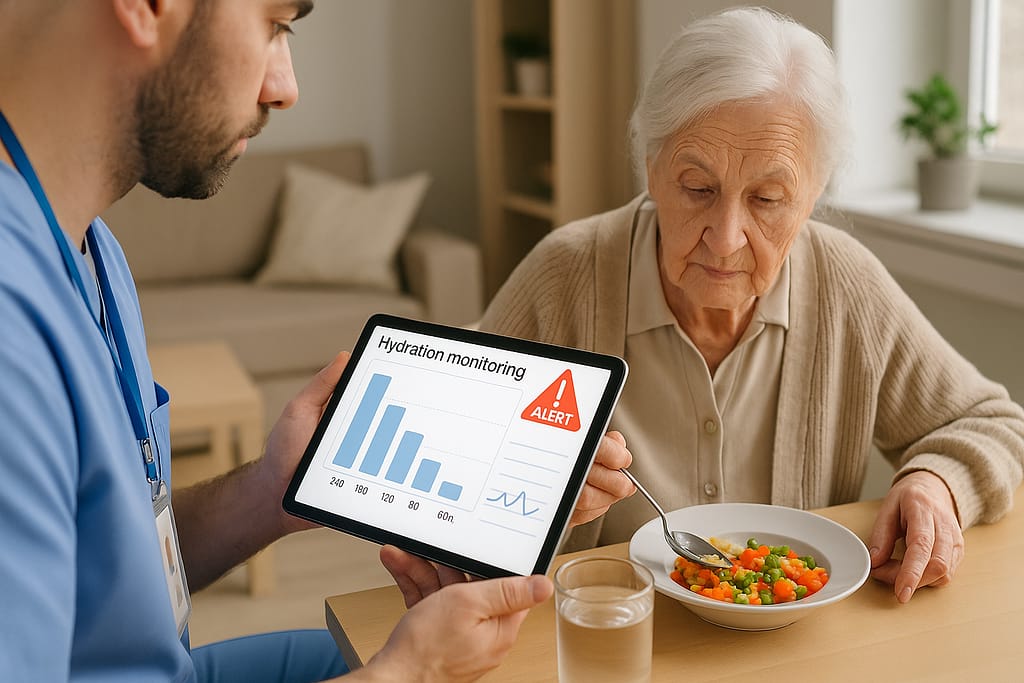
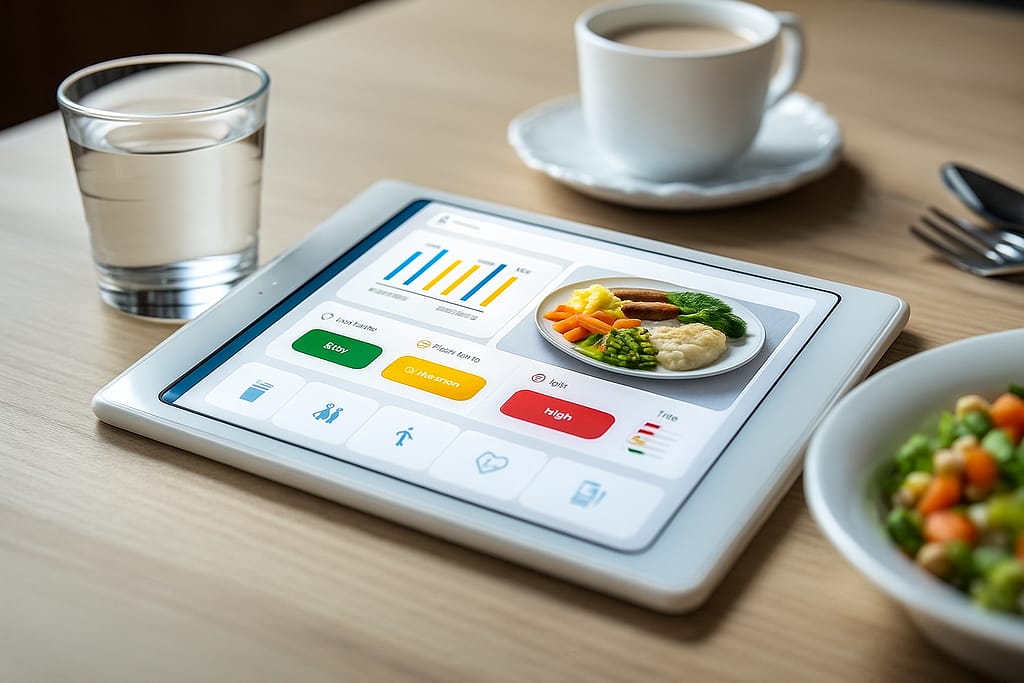
Modern digital care platforms are transforming how teams capture and interpret day-to-day nutritional information. Simple inputs — such as meal intake notes, fluid prompts, or quick photos of plates before and after meals — are paired with analytics that highlight emerging risks earlier.
Care services are already using AI-enabled tools to:
- Track hydration levels with automated prompts when fluid intake drops below agreed thresholds.
- Estimate meal consumption from photos, reducing the need for carers to manually tally intake.
- Explore voice and movement indicators, with early research showing promise in surfacing potential dysphagia signals sooner.
Together, these tools build a more consistent, real-time picture of each person’s nutritional status — helping teams intervene early and with confidence.
Why It Matters
Age UK estimates that more than 1 in 10 older people are at risk of malnutrition. In care settings, this risk is often compounded by appetite changes, medication side-effects, memory challenges, and reduced mobility. These signs are not always obvious during routine care.
When used effectively, AI helps care teams:
- Adjust portion sizes, textures, and meal timings to better match individual preferences.
- Plan hydration rounds more strategically, including fortified drinks or high-fluid snacks.
- Escalate earlier to GPs, SALTs, or dietitians, supported by clearer digital evidence.
Services adopting digital nutrition workflows also report wider benefits: fewer avoidable transfers, smoother recovery patterns, and calmer, more personalised mealtime experiences.
Aligned With CQC and NHS Priorities
Nutrition and hydration remain central to both CQC’s Effective domain and the NHS’s Ageing Well initiatives.
Digital tools support compliance by strengthening:
- Consistency in recording
- Clarity of evidence
- Timely follow-up
- Audit-ready documentation
This not only increases service confidence during inspections but also provides families with clearer insight into how risks are monitored and managed.
Human Technology, Human Outcomes
AI is not here to replace professional judgement — or the human connection that makes mealtimes meaningful. It cannot choose whether someone prefers porridge or toast, but it can ensure those choices are documented, respected, and acted upon.
By reducing the burden of manual counting, duplicated paperwork, and missed hydration prompts, teams gain more time for what truly matters: unhurried, dignified, person-centred support.
What’s Next
Over the coming years, integrated AI platforms may combine:
- Hydration patterns
- Weight and BMI trends
- Medication changes
- Mobility and activity indicators
…to generate early-warning nutrition risk scores. The goal is clear: spot risk sooner, intervene earlier, and prevent avoidable decline before it starts.
The Bottom Line
AI won’t share a lunchtime conversation — but it can help ensure no one quietly slips into nutritional risk.
When used thoughtfully and transparently, digital nutrition tools become some of the most human applications of technology in care: noticing sooner, acting faster, and supporting better outcomes for older adults across the UK.
Want to discover more stories about innovation in care? Visit Care AI News for the latest updates.
