
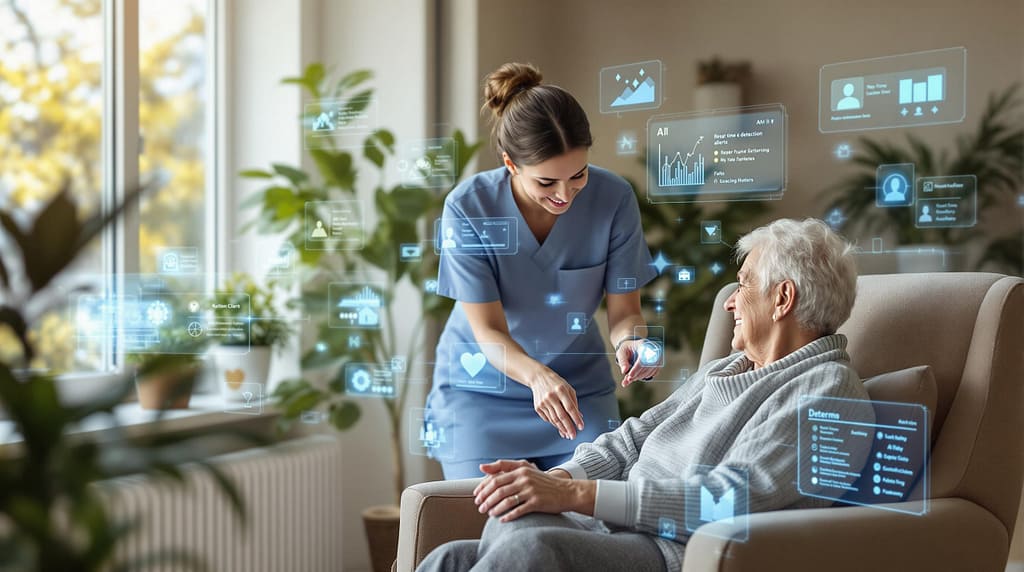
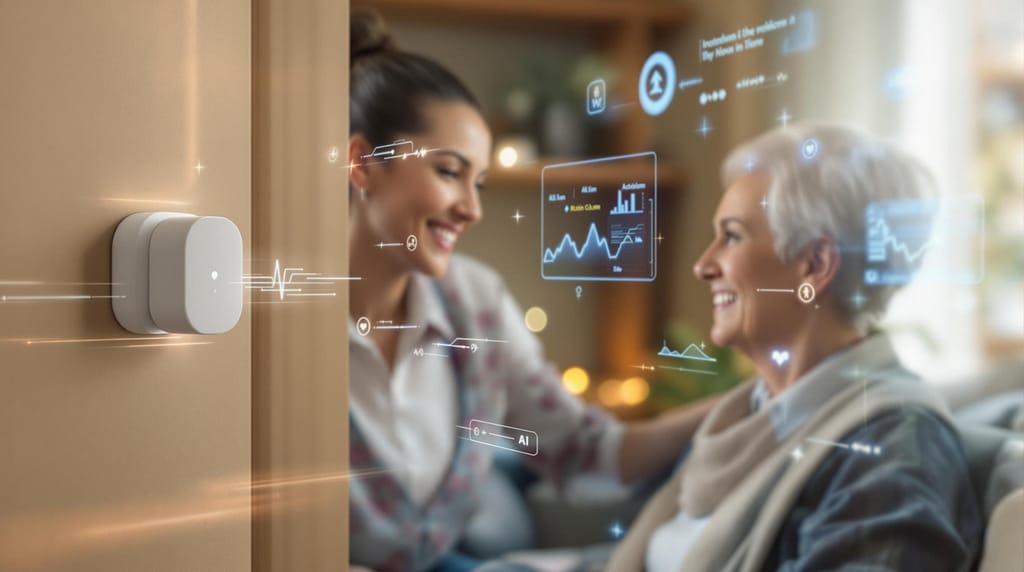
What is AI-Powered Monitoring and Safety?
AI-powered monitoring and safety systems are a new generation of technology designed to enhance the quality of care in residential settings.
By combining advanced sensors with artificial intelligence, these systems provide continuous, real-time oversight of residents’ well-being, helping staff respond quickly to emergencies and subtle changes in health.
How Does It Work?
Modern care homes are piloting sensor networks that can be placed unobtrusively in residents’ rooms or common areas. These sensors collect a wide range of data, including movement, sound, and environmental factors. The AI analyses this data to detect:
- Falls and Sudden Movements: The system can instantly recognise when a resident has fallen or made an unusual movement, triggering an alert for immediate staff response.
- Vocal Distress or Calls for Help: AI can distinguish between normal conversation and distress calls, ensuring that staff are notified even if a resident cannot reach a call button.
- Pain and Discomfort in Non-Verbal Residents: By analysing facial expressions, body language, and behaviour, AI tools like PainChek can identify signs of pain in residents who are unable to communicate verbally, such as those with advanced dementia or neurological conditions.
- Restlessness, Coughing, or Choking: The system can pick up on patterns of restlessness, coughing, or choking, which may indicate underlying health issues.
- Environmental Changes: Sensors can monitor air quality, temperature, and even increased trips to the toilet, alerting staff to potential health or safety risks.
Featured Tool: PainChek
PainChek is a leading example of how AI is being used to improve care for non-verbal residents. The app uses a smartphone or tablet camera to scan a resident’s face, analysing micro-expressions and other cues to assess pain levels. This information is then shared with care staff, who can take appropriate action, ensuring that pain does not go unnoticed or untreated.
Why Does This Matter for Care Homes?
The adoption of AI-powered monitoring brings several key benefits:
- Proactive Care: Instead of reacting to incidents after they occur, staff can intervene early, preventing complications and improving outcomes.
- Reduced Hospital Admissions: Early detection of health issues means residents are less likely to require emergency hospital visits, which can be distressing and disruptive.
- Enhanced Resident Safety: Real-time alerts ensure that staff can respond to emergencies or subtle changes in health, even during busy periods or overnight shifts.
- Support for Non-Verbal Residents: AI tools bridge the communication gap for residents who cannot express their needs, ensuring they receive appropriate care and comfort.
- Operational Efficiency: Automated monitoring reduces the need for frequent manual checks, allowing staff to focus on meaningful interactions and personalised care.
Practical Applications in Care Homes
Here’s how care homes are putting these systems to work:
- 24/7 Monitoring: Residents are continuously monitored for safety, without the need for intrusive checks.
- Pain Management: Staff can use AI insights to adjust care plans and pain relief strategies, improving comfort and quality of life.
- Incident Prevention: Early warnings about falls, distress, or environmental hazards help prevent accidents before they happen.
- Data-Driven Insights: Over time, the system builds a profile of each resident’s typical behaviour, making it easier to spot changes that may indicate health problems.
- Family Reassurance: Families can be confident that their loved ones are being monitored with the latest technology, providing peace of mind.
A Realistic Perspective
While AI-powered monitoring is a powerful tool, it is not a substitute for human care and compassion. Staff remain essential for interpreting alerts, making decisions, and providing emotional support. Think of these systems as a digital safety net—helping your team deliver safer, more responsive, and more personalised care.
Conclusion:
AI-powered monitoring and safety systems are setting a new benchmark for care in UK homes. By combining real-time detection with actionable insights, these technologies empower care teams to respond faster, reduce risks, and provide truly person-centred support, especially for residents who need it most.
For care homes looking to enhance safety, efficiency, and quality of life, AI-powered monitoring is a practical and forward-thinking investment.
