
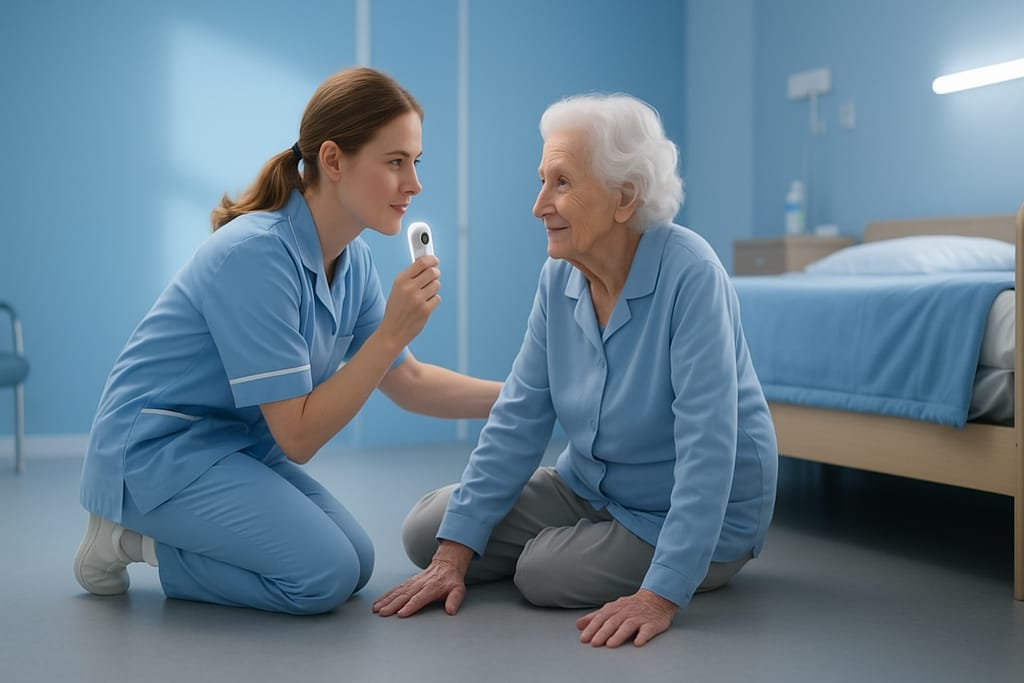
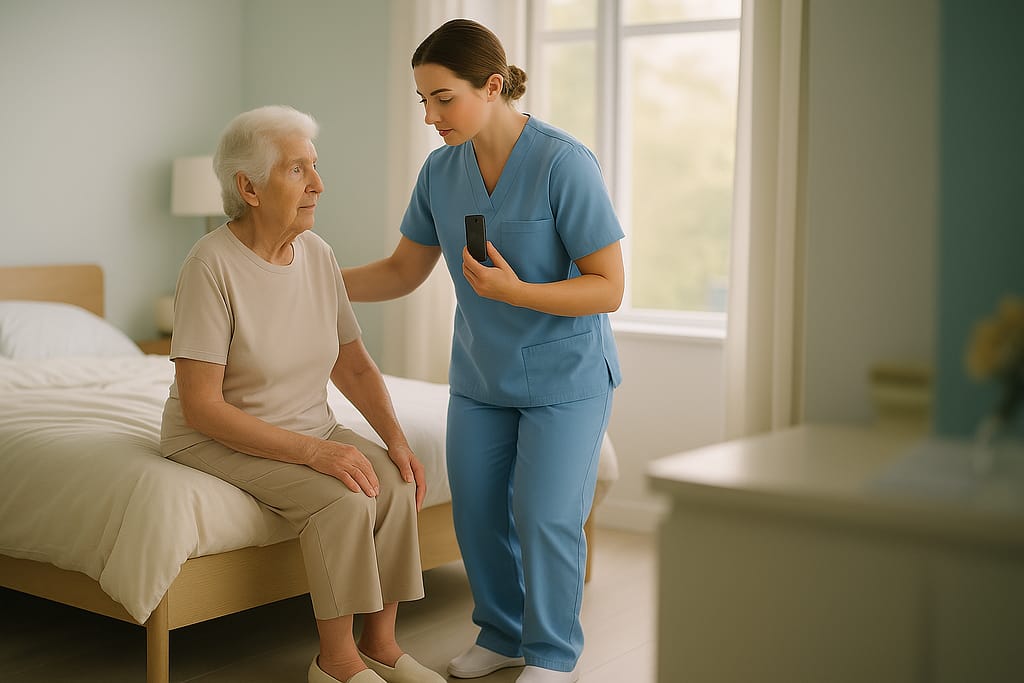
Picture this: you’re halfway through your shift at the care home, rushing between residents, when Mrs. Johnson has a fall. Instead of trying to remember every detail to write up later (and probably forgetting half of it), you simply tap a small device on your uniform and speak: “Mrs. Johnson slipped in the bathroom at 2:15pm, no injuries, seemed dizzy, helped her to bed.”
Done. The AI transcribes it instantly, and you can get back to caring.
This isn’t some far-off fantasy – it’s the PLAUD NotePin, a £150 wearable AI recorder that’s smaller than a matchbox and could revolutionise how UK care homes handle paperwork.
The Paperwork Problem
Anyone who’s worked in care knows exactly what I’m talking about here. You spend your entire day focused on residents – as you absolutely should – then end up staying late writing up notes, incident reports, and handover information. It’s exhausting, and let’s be honest – sometimes important details get forgotten or rushed.
The PLAUD NotePin changes this completely. Think of it as having a personal assistant that never forgets anything, never calls in sick, and fits in your pocket!
Documentation Made Simple
Incident Reports in Real-Time
Instead of scribbling quick notes on your hand (we’ve all been there, haven’t we?), you can record incidents as they happen. The device captures everything with timestamps, so you’ll never again wonder “Was that fall at 2pm or 3pm?”
The AI even organises your voice notes into proper written reports, turning “Mr. Smith refused his medication again, seemed agitated about the new tablets” into professional documentation that meets CQC standards. That’s gold dust when inspection time comes around!
Care Notes That Actually Get Done
How many times have you thought, “I must remember to note that Mrs. Davies loved the music therapy session”, only to completely forget by the end of your shift? With the NotePin, you record it immediately. The device stores everything securely and transcribes it later, so nothing falls through the cracks.
Medication Rounds Made Safer
During medication rounds, you can quickly voice-record any concerns: “Mr. Thompson complained of nausea after morning tablets” or “Mrs. Wilson’s new cream caused slight redness.” These observations are crucial for resident safety but often get forgotten in busy shifts. And we all know medication safety isn’t something to take chances with!
Handovers That Actually Work
Let’s talk about handovers. Someone’s running late, information gets rushed, and the night staff miss crucial details about Mr. Brown’s difficult afternoon or the fact that Mrs. Green’s daughter is visiting tomorrow.
The NotePin transforms handovers from frantic information dumps into organised, comprehensive briefings. Day staff can record important updates throughout their shift – resident mood changes, family conversations, care plan adjustments – and night staff get a complete picture.
The device supports 112 languages, which is brilliant for care homes with diverse teams. Everyone can record in their most comfortable language, and the AI handles the translation. That’s like having a professional translator on staff 24/7!
Better Resident Care
Capturing the Little Things
The best care comes from knowing residents as individuals. When you discover that Mr. Ahmed perks up when you mention cricket, or that Mrs. Chen gets anxious before lunch, these insights make all the difference. But in busy shifts, these golden nuggets of information often get lost.
With voice recording, you can capture these moments instantly: “Mrs. Patterson smiled for the first time this week when we played her favourite song”, or “Mr. Williams seems more confused in the afternoons – might need medication review.”
Family Communications
Family conversations are crucial but can be complex. Recording key points from family meetings or phone calls ensures nothing gets misunderstood or forgotten. “Mrs. Taylor’s son concerned about weight loss, wants doctor review next week” – captured accurately and available for the whole care team.
Behavioral Patterns
Spotting changes in residents’ behaviour early can prevent bigger problems. Quick voice notes like “Mr. Roberts more agitated past three days, refusing personal care” help identify patterns that might indicate pain, infection, or medication issues. It’s like having an early warning system for resident wellbeing!
The Practical Stuff
Privacy is built-in with encrypted storage, addressing those crucial data protection requirements. And with 64GB storage, you’re not going to run out of space anytime soon. That’s peace of mind in your pocket!
The NotePin is part of a new wave of wearable tech. It weighs just 16.6 grams – lighter than most badges – and lasts 20 hours on a single charge. You can wear it as a pin, clip, or even a necklace. It’s designed to be forgotten until you need it.
Real Impact
Imagine finishing your shift knowing that every important detail has been captured accurately. No more staying late to write reports from memory. No more worrying that you’ve forgotten to pass on crucial information. No more illegible handwritten notes that nobody can read.
Care homes using this type of technology could easily save 2-3 hours per staff member per week on documentation. That’s time that can be spent with residents instead of paperwork. Just think about that – if you have 20 staff, that’s potentially 60 hours of care time given back to your residents every single week!
The Bottom Line
The PLAUD NotePin isn’t just another gadget – it’s a tool that could give care workers back their most precious resource: time. Time to sit with Mrs. Johnson after her fall. Time to really listen when Mr. Smith talks about his grandchildren. Time to provide the compassionate care that drew you to this work in the first place.
At £150, it costs less than a single agency shift but could transform how your care home operates. In an industry where every minute counts and every pound matters, that’s not just smart – it’s essential.
