
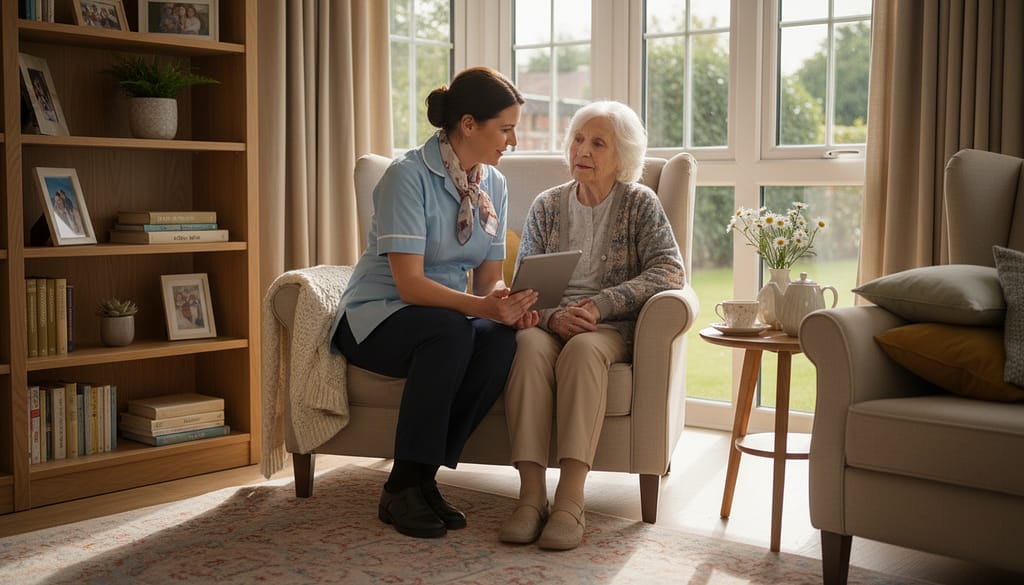
In care homes across the UK, one of the most difficult daily challenges remains recognising when residents—especially those living with dementia—are in pain. For many, communication barriers make it nearly impossible to describe discomfort, leaving carers to rely on behavioural changes or instinct. The result? Pain often goes unnoticed, untreated, or misdiagnosed.
But now, technology is quietly reshaping that reality.

The Rise of AI Pain Detection
Over 1,800 care homes worldwide are now using PainChek, an AI-powered app that analyses tiny facial expressions to detect signs of pain—expressions that might be too subtle for even experienced carers to spot.
Instead of relying solely on verbal cues or observation, staff can use a smartphone or tablet to scan a resident’s face in under three minutes. The AI then assesses micro-movements—like tightened brows or narrowed eyes—to generate an objective pain score.
It’s a tool designed not to replace empathy, but to support carers with evidence-based insight.
Why This Matters
Recognising pain is not just about comfort. Unmanaged pain can affect mobility, mood, and medication use, and can even lead to behavioural distress. For residents living with dementia, this often manifests as agitation or withdrawal—symptoms that might be mistaken for confusion rather than discomfort.
By providing a clear, measurable indication of pain, AI tools like PainChek are helping staff make faster and more confident clinical decisions. That means:
- Greater staff confidence and consistency in care
- More targeted pain management
- Reduced use of unnecessary medication
- Calmer, more comfortable residents
What the Data Shows
So far, the global adoption of PainChek has led to over 10 million clinical assessments—each contributing to a growing body of evidence that AI-assisted pain detection works.
In the UK alone, care groups such as Care UK, Avery Healthcare, and Methodist Homes have implemented the technology. In one regional NHS-supported programme across Bedfordshire, Luton and Milton Keynes, more than 14,000 assessments were conducted for 764 residents, leading to improved well-being and reduced distress.
Human Impact, Backed by Data
For care teams, the most striking benefit is often emotional rather than technological. Staff report feeling more confident that residents’ needs are truly being met. Families find reassurance knowing their loved one’s pain is being monitored objectively. And residents—many of whom can’t express discomfort—experience calmer, more dignified care.
As one care manager put it:
“It’s not about technology replacing compassion. It’s about giving that compassion better direction.”
The Future of Pain Recognition
As digital care platforms become standard in UK care homes, AI tools like PainChek are increasingly being integrated directly into care systems. This allows assessments to be logged automatically, tracked over time, and shared with clinicians—creating a continuous, data-informed view of each resident’s wellbeing.
While ethical questions around privacy and consent remain key considerations, most care providers agree: when used responsibly, AI offers a new level of understanding that can transform person-centred care.
A Step Toward Truly Person-Centred Care
Pain recognition is more than a clinical task—it’s a matter of dignity. Every expression, every wince or sigh, tells a story that deserves to be heard.
By bringing artificial intelligence into the equation, care homes are ensuring that no pain goes unseen, even when words can’t express it.
For more stories on how technology is transforming UK care, visit Care AI News.
