
Here’s a sobering fact: falls are the leading cause of injury-related deaths in people over 65. In care homes, they’re not just a health risk – they’re a financial and reputational nightmare.
Every fall costs the NHS an average of £2,300 to treat. For care homes, the costs are even higher when you factor in staff time, potential litigation, and the impact on your CQC rating. One serious fall can trigger an investigation, damage your reputation, and make those empty beds even harder to fill.
But here’s the thing – most falls are preventable. And AI technology is proving it.
The Real Cost of Falls in Care Homes
Let’s be honest about what falls actually mean for your business. Beyond the obvious human cost (which is massive), there’s the operational impact:
- Staff spend hours on incident reports and follow-ups
- Families lose confidence and start looking elsewhere
- CQC inspectors start asking difficult questions
- Your insurance premiums go up
- Potential residents choose competitors with better safety records
Falls cost the NHS around £2 billion every year and account for over 4 million bed days annually. Around 30% of people aged 65 and above – that’s 2.5 million people – will experience a fall at least once a year. For those aged 80 and above, it’s around half.
One care home manager told researchers that an average of six hours is lost in administration and reporting when a resident falls. That’s nearly a full working day, just documenting problems instead of preventing them.
The traditional approach – regular checks, call bells, and hoping for the best – simply isn’t cutting it anymore. By the time staff respond to a call bell, the fall has already happened.
How AI is Changing the Game
AI fall prevention isn’t some futuristic concept. It’s happening right now in care homes across the UK, and the results are genuinely impressive.
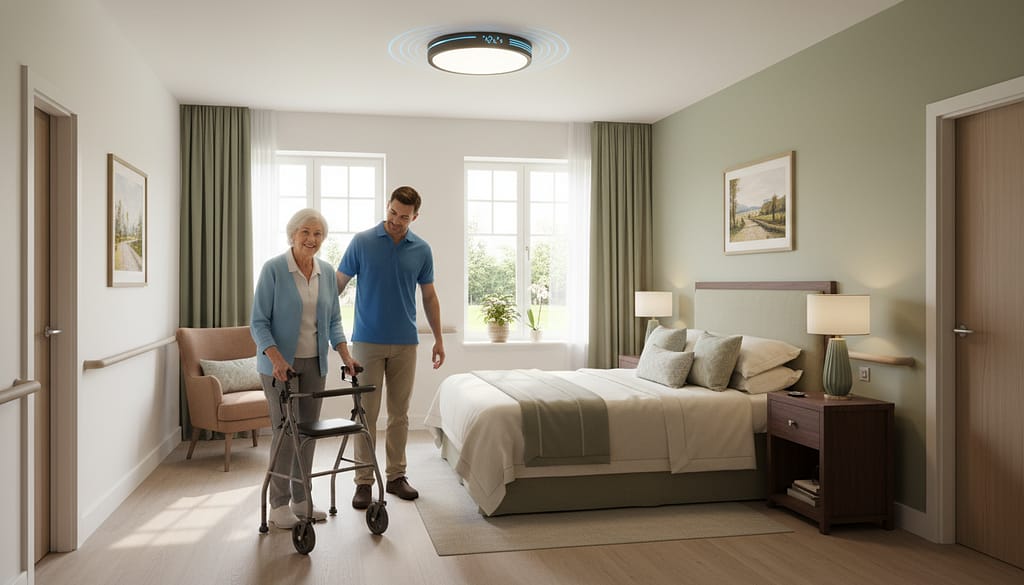
These systems work by constantly monitoring residents and predicting falls before they happen. Think of it like having an extra pair of eyes in every room, 24/7, that never gets tired or distracted.
Modern AI fall prevention uses smart technology that can:
Detect Movement Patterns: AI analyses how residents move and spots when someone’s at risk of falling – before they actually fall. If a resident starts moving unsteadily or attempts to get up without support, the system alerts staff immediately.
Provide Automatic Lighting: Smart systems adjust lighting when residents get up at night, reducing trip hazards and disorientation.
Alert Staff Instantly: When a fall does occur, care teams are notified within seconds, not minutes or hours.
Work Without Cameras: Most systems use sensors and radar technology rather than cameras, protecting resident privacy and dignity.
Real Results: Hartland House Care Home
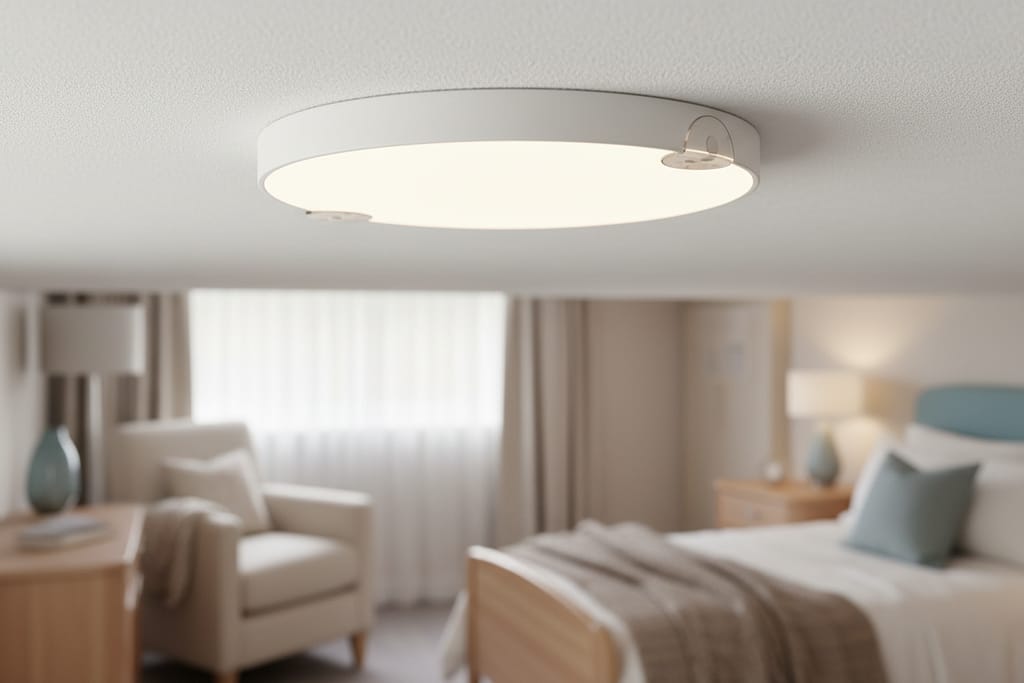
Hartland House, a 31-bedroom residential care facility in Milnthorpe, Cumbria, partnered with NHS Lancashire and South Cumbria Integrated Care Board to pilot AI fall prevention technology. They installed Nobi’s Smart Lamps – AI-powered lights that combine optical sensors with smart technology to detect and prevent falls.
The results from their six-month pilot were remarkable:
- 84% Reduction in Falls
- 100% Fall Detection Rate – every single fall was detected
- Response times dropped from 57 minutes to under 2 minutes – that’s 28 times faster
- Zero “long-lie” incidents – no residents left on the floor after a fall
- Massive Time Savings – with each fall previously requiring six hours of administrative work
After starting with just eight high-risk bedrooms, the results were so impressive that Hartland House expanded the technology throughout their entire home.
Rebecca Etherington, Health and Wellbeing Lead at Hartland House, said: “The lamps have significantly reduced response times, which means our residents get assistance promptly when they need it most. The peace of mind it brings to our team and residents’ families is invaluable.”
The Business Case is Clear
The success at Hartland House was so significant that NHS Lancashire and South Cumbria ICB committed funding to roll out the technology to 500 additional residential units across 50 care homes in the region.
If you prevent just one serious fall per month, the system could pay for itself – and that’s before you factor in the time savings, improved reputation, and better CQC outcomes.
What About Privacy?
This is usually the first question families ask, and it’s a fair one. Nobody wants cameras in bedrooms.
The good news? The Nobi Smart Lamps used at Hartland House don’t work like traditional cameras. They use optical sensors and AI to detect movement and falls without recording identifiable images. The technology monitors for falls and unusual movement patterns while protecting resident dignity.
Many families actually find this less intrusive than regular room checks, which can disturb residents’ sleep and privacy.
The Impact on Staff
The benefits aren’t just for residents. At Hartland House, staff reported:
Massive Time Savings: With falls reduced by 84% and each fall previously requiring six hours of administrative work, staff gained back valuable time to focus on actual care rather than paperwork.
Faster Response: Response times dropping from 57 minutes to under 2 minutes meant staff could help residents immediately, reducing anxiety and improving outcomes.
Peace of Mind: Knowing that every fall would be detected 100% of the time eliminated the stress of potentially missing an incident.
Better Job Satisfaction: Staff could shift from reactive to preventive care, focusing on what they do best – looking after people.
Leanne Scrogham, Care Manager at Hartland House, was emphatic about the technology: “If other care homes don’t get these lamps, I think it will be the biggest mistake they’ll ever make. They should be in every care home in the country without a doubt.”
What This Means for Your Care Home
The care sector is getting more competitive every year. Families are more informed, CQC standards are rising, and residents (rightly) expect better care.
AI fall prevention isn’t just about reducing incidents – though that alone makes it worthwhile. It’s about:
- Standing out from competitors
- Giving families peace of mind
- Improving your CQC ratings
- Freeing up staff to provide better care
- Protecting your reputation and bottom line
The results from Hartland House show what’s possible when care homes embrace proven technology. An 84% reduction in falls isn’t just a statistic – it’s fewer injuries, fewer hospital admissions, happier residents, and more confident families.
There Are Challenges
AI fall prevention isn’t magic, and it’s not without challenges:
Initial Setup: You need proper WiFi coverage and time for installation. Budget a few weeks for getting everything running smoothly.
Staff Training: Your team needs to understand how the system works and trust it. This takes time and proper training – don’t skip this step.
Integration: The system needs to work with your existing care management software. Make sure you choose a solution that fits with what you already have.
Investment: Yes, there’s an upfront cost. But compared to the cost of falls – both financial and human – and the potential impact on your business, it’s money well spent.
The Bottom Line
Falls will always be a risk in care homes – but they don’t have to be inevitable.
The evidence from Hartland House shows that AI technology can dramatically reduce falls in ways that simply weren’t possible five years ago. An 84% reduction in falls, 100% detection rate, and response times 28 times faster aren’t just impressive numbers – they’re proof that this technology works.
The NHS Lancashire and South Cumbria ICB was so convinced by the results that they’re funding rollout to 500 more units across 50 care homes. That’s not a pilot project – that’s a vote of confidence in proven technology.
The question isn’t whether AI fall prevention works – the evidence is clear that it does. The question is whether you’ll implement it before your competitors do, or wait until families start choosing other care homes because of their superior safety technology.
In a business where reputation is everything and every resident matters, can you really afford not to explore this?
Want to know more about implementing AI fall prevention in your care home? This is exactly the kind of practical technology advantage that separates thriving care homes from struggling ones.
