
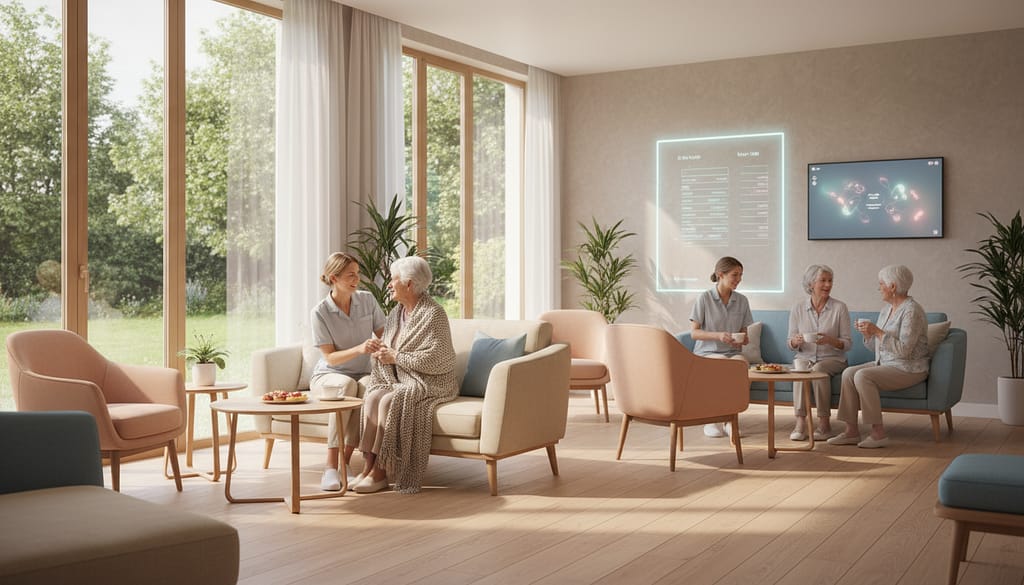
Across the UK care sector, one issue continues to dominate conversations: staffing pressure.
Too much time spent on admin. Too much reliance on agency workers. Too little time for direct care.
While recruitment and retention remain long-term challenges, many care homes are finding an immediate way to ease pressure — through AI-enabled workforce optimisation. It’s a practical shift that’s quietly helping teams reclaim time, reduce costs, and deliver safer, more consistent care.
What’s Changing
AI is increasingly being integrated into rota management and digital care systems, helping care teams make faster, smarter staffing decisions. Instead of adding extra layers of admin, these tools streamline existing workflows and support CQC’s Safe and Well-Led domains.
The new generation of AI-powered tools can:
- Optimise rotas in real time, suggesting the best coverage based on skill mix, resident acuity, and risk.
- Prioritise tasks intelligently, adjusting carers’ digital task lists as residents’ needs change throughout the day.
- Reduce paperwork, using voice-to-text and automated templates to avoid double documentation.
- Forecast staffing needs, predicting demand weeks ahead to reduce agency reliance.
Why It Matters
These aren’t futuristic add-ons — they’re practical time-savers already delivering results in UK care settings.
Care homes using AI-enabled optimisation report:
- More time for residents: up to 90 minutes reclaimed per carer, per shift.
- Improved outcomes: better hydration, fewer falls, and reduced agitation.
- Happier teams: predictable rotas and less “firefighting” improve morale and retention.
- Lower costs: every avoided agency shift protects both budgets and continuity of care.
When routine tasks run smoothly, carers can focus on what matters most — meaningful human connection.
Where It’s Working
Across the country, digital care providers are embedding AI-driven features directly into day-to-day operations, including:
- Rota systems that balance skill mix across wings or units.
- Care platforms prompting timely checks for hydration, pain, or repositioning.
- Automated incident reports aligned with CQC evidence requirements.
- Handover summaries generated directly from voice notes.
This isn’t about adding new systems — it’s about making existing ones work smarter.
How to Start Small
Homes seeing the biggest gains often begin simply:
- Start with one unit. Measure current admin time, agency hours, and resident outcomes.
- Train champions. Two motivated “super-users” per shift can model new habits.
- Integrate, don’t add. Keep everything within the systems staff already use.
- Measure monthly. Track care minutes gained, incidents reduced, and satisfaction scores.
Even small pilots can create visible, morale-boosting wins within weeks.
Risks and Realities
AI isn’t a silver bullet — its success depends on good data, clear communication, and trust.
Key considerations:
- Change fatigue: Roll out gradually and involve staff early.
- Data quality: Clean rosters and accurate care plans improve AI accuracy.
- Privacy: Ensure UK data residency and transparent consent processes.
Handled well, these challenges become opportunities to build engagement and confidence across teams.
The Bottom Line
AI won’t replace carers — it will remove friction so they can do what only humans can: notice the small changes, share a smile, and deliver truly person-centred care.
In a sector where every minute counts, that’s not just innovation — it’s restoration.
For more insights on how technology is transforming UK care, visit Care AI News.
