
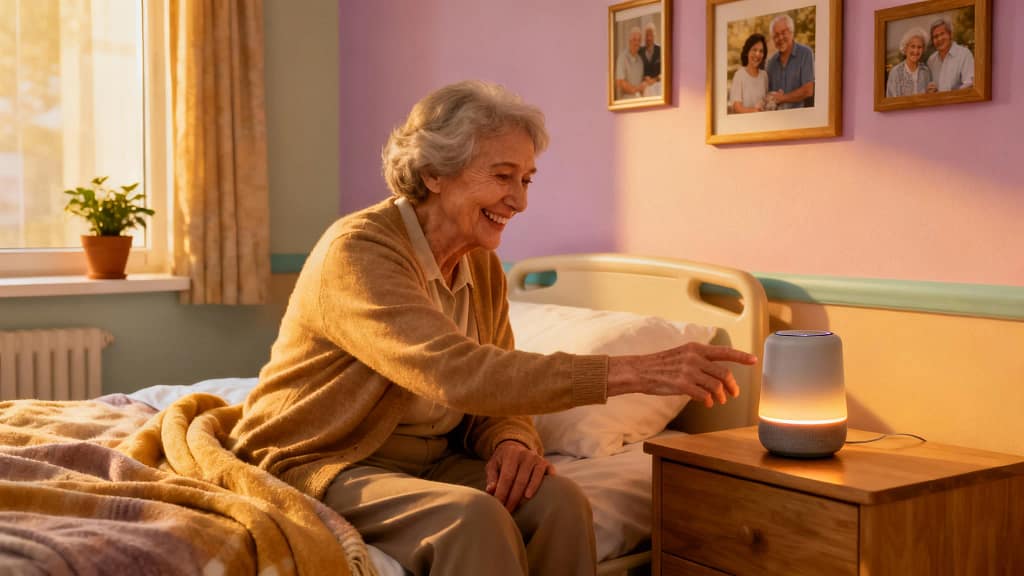
Let’s cut to the chase – AI is transforming the care sector, and voice technology is leading the charge. This isn’t some far-off future we’re talking about. It’s happening right now in care homes across the UK and beyond.
Think about it. From basic smart speakers that residents can chat with to sophisticated companion robots that actually engage in conversation – voice AI is being tested in care settings worldwide. And for good reason.
The potential upside is massive. These tools promise convenience (imagine fewer call bells for simple requests), enhanced safety (voice-activated emergency calls), and even companionship for residents who might be feeling isolated.
Why This Matters to Your Bottom Line
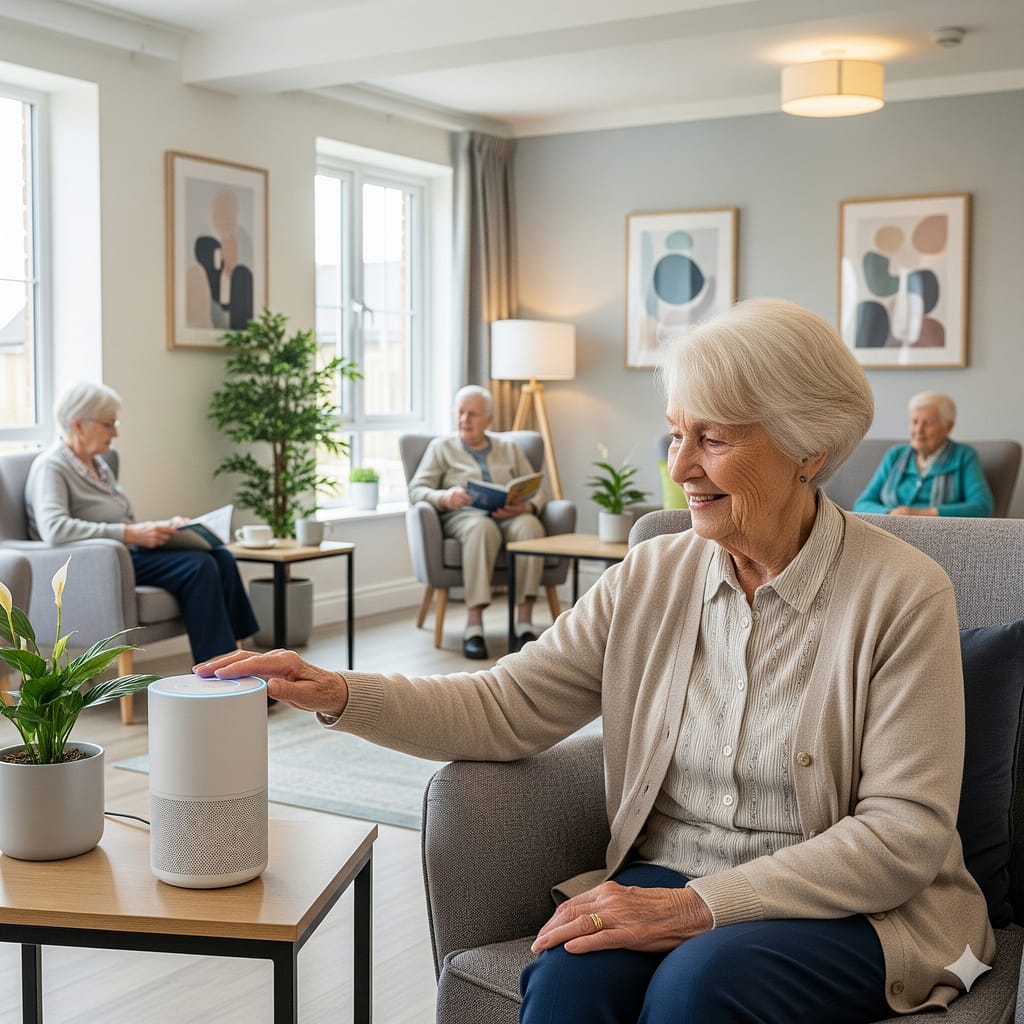
Voice assistants aren’t just gadgets. In a care setting, they’re solving real problems:
• They give medication reminders (freeing up staff time)
• They provide companionship (improving resident satisfaction)
• They can call for help in emergencies (reducing risk)
• They handle routine tasks (making your team more efficient)
This isn’t theoretical – care homes are already seeing results.
Real Examples That Prove It Works
A massive trial in Southwest England put 150 smart speakers across 92 care homes. Residents used them for everything – music, poetry, jokes, even video calls. Care home managers reported better engagement and happier residents. Some even learned new skills!
Yes, there were hiccups with internet connectivity and staff training, but that’s exactly why you need someone like us to help you implement this properly.
In Singapore, they’re using voice assistants to check in on elderly residents living alone. The system makes daily calls and alerts staff if someone doesn’t respond. Brilliant safety net, isn’t it?
Then there’s ElliQ – not strictly for care homes, but showing where this is all heading. It’s a “proactive companion robot” that doesn’t just respond to commands but actually suggests activities and sends health updates to caregivers.
The Pros and Cons (We’ll Give It to You Straight)
The Good Stuff:
• Residents are more engaged and happier
• It provides companionship (which we know is crucial)
• Your staff can focus on proper care instead of routine tasks
• Added safety features give families peace of mind
The Challenges:
• You need decent internet (sort this first!)
• Staff training is essential (and often overlooked)
• Privacy concerns need addressing
• Sometimes the tech misunderstands commands
What This Means for Your Care Home
Look, the care sector is changing. Those who adapt will thrive; those who don’t will struggle.
Voice AI isn’t about replacing your amazing care staff – it’s about enhancing what they do. It’s about making your residents’ experience better while potentially reducing some of your operational headaches.
The care homes we work with that are embracing technology are seeing higher occupancy rates, better staff retention, and improved CQC ratings. That’s not coincidence.
If you’re serious about maximising the value of each resident while providing truly outstanding care, voice AI needs to be on your radar. It’s not just about keeping up – it’s about standing out in an increasingly competitive market.
Want to know more about implementing this in your care home? Drop us a line. This is exactly the kind of practical marketing and operational advantage we help care homes achieve every day.
